Historic Tour of Kampong Glam: A Royal Legacy
Meeting point
1Sultan Mosque (Masjid Sultan)
The Grand Dame of Kampong Glam
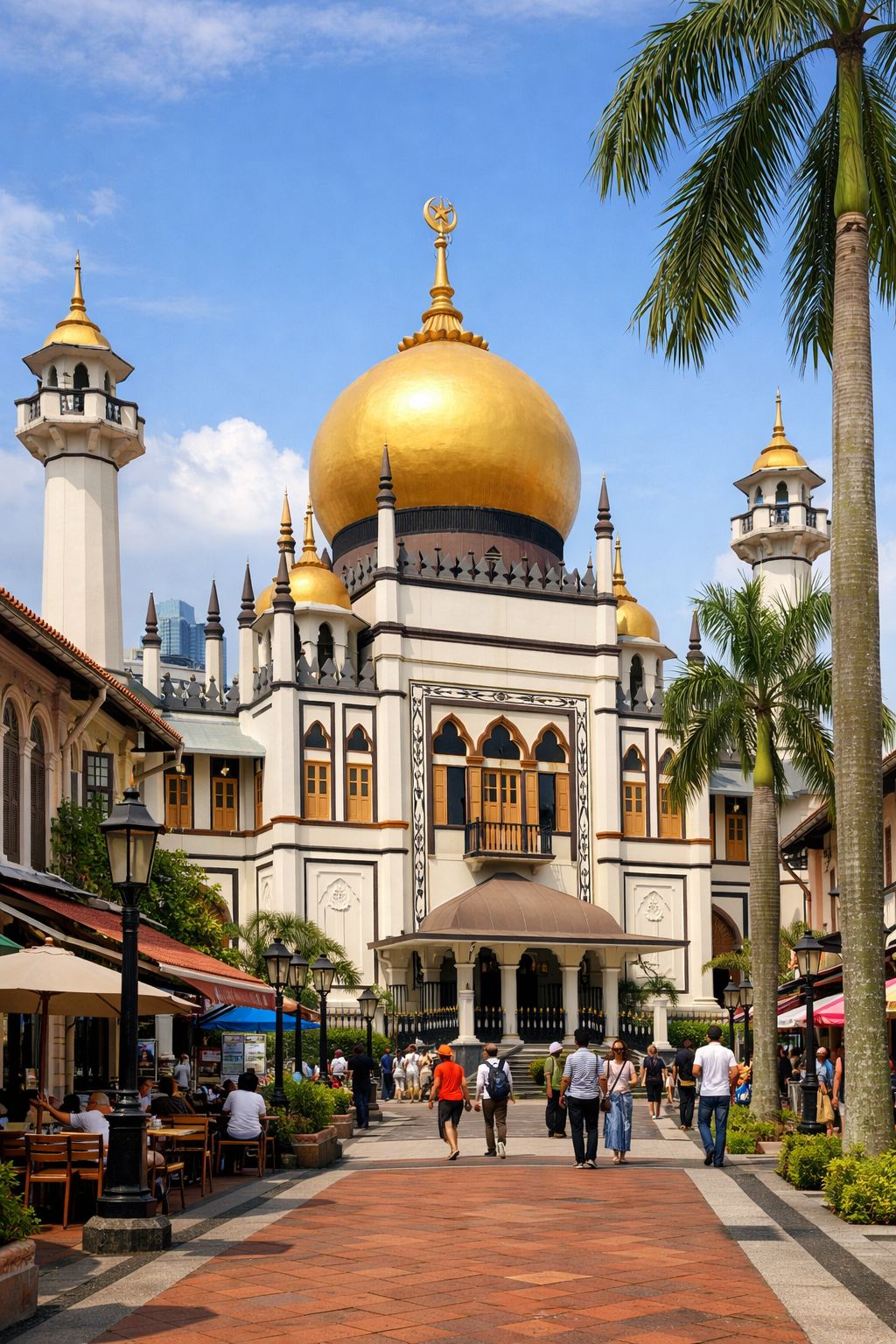
Dominating the Kampong Glam skyline, Sultan Mosque stands as a majestic symbol of Singapore's Muslim community. Built in 1826 by Sultan Hussein Shah, the original wooden structure was later replaced in 1928 with the magnificent golden-domed mosque you see today. Notice the unique base of the enormous golden dome: it's adorned with glass bottles, collected from donations by poorer Muslims, ensuring everyone could contribute to its construction. This architectural marvel blends Islamic and European styles, serving as a vital spiritual and community hub for over a century.
- 2
Bussorah Street
A Walk Through History: From Palm Plantations to Pedestrian Paradise
Bussorah Street, once a dusty path leading to the Sultan's palace, is now a charming pedestrian mall brimming with character. Originally part of a vast gambier and palm plantation, it transformed into a bustling commercial hub with the arrival of Arab traders in the 19th century. The ornate shophouses lining the street today once housed pilgrim brokers, money changers, and spice merchants. Look closely at the architectural details – many still bear the hallmarks of their historical functions, showcasing a fusion of Malay, Arab, and European influences. It's a vibrant testament to the area's rich trading past.
- 3
Malay Heritage Centre (Istana Kampong Gelam)
The Royal Seat of Malay Culture
Step back in time at the Malay Heritage Centre, housed within the beautifully restored Istana Kampong Gelam. This was once the royal palace of Sultan Hussein Shah, built in 1840. The Anglo-Malay architectural style of the palace reflects the blend of cultures present during its construction. Today, it serves as a museum dedicated to the heritage and culture of the Malay community in Singapore. Its exhibits vividly narrate the story of Kampong Glam, from its pre-colonial origins to its rich commercial and cultural tapestry.
- 4
Sultan Gate
Where Royalty Once Roamed
Sultan Gate was the main entrance to the Istana (palace) grounds, the royal precinct of Sultan Hussein Shah and his descendants. Imagine carriages and royal entourages passing through this very spot! The street itself, now a vibrant thoroughfare, was historically part of the larger Kampong Glam estate. It's fascinating to note how the layout of streets like this still echoes the original design of the royal compound. Today, Sultan Gate offers an interesting mix of traditional businesses and modern cafes, a nod to Kampong Glam's continuous evolution while honouring its past.
- 5
Haji Lane
From 'Pilgrim's Path' to Hipster Haven
Haji Lane, once a quiet back alley where pilgrim brokers arranged sea voyages to Mecca, has transformed into one of Singapore's most vibrant and 'instagrammable' streets. Its name, 'Haji,' refers to the Muslim pilgrimage. In the past, this narrow lane was lined with budget accommodations and shops catering to pilgrims. Today, it's famous for its colourful street art, independent boutiques, quirky cafes, and lively bars. Despite its modern facade, the narrowness and intimate scale of the lane still hint at its historical function as a place of passage and connection, reflecting its unique evolution.
- 6
Arab Street
The Spice and Textile Crossroads
Arab Street, the bustling heart of Kampong Glam, has been a commercial epicentre for over two centuries. Its name itself reflects the significant influence of Arab traders and settlers who established their roots here. Historically, this served as one of the key administrative and commercial streets within the Kampong Glam Glam estate. Today, it remains famous for its exquisite textiles, especially silk, batik, and Persian carpets, as well as fragrant perfumes and essential oils. The aroma of spices and the vibrant colours of fabrics create an immersive sensory experience, echoing its rich trading legacy.
- 7
Bali Lane
A Glimpse into Old Town Charm
Nestled between Haji Lane and Arab Street, Bali Lane offers a quieter, yet equally charming, glimpse into Kampong Glam’s past. While perhaps less overtly historical in its name, this lane once formed part of the larger network of thoroughfares within the royal precinct, serving various community needs. Today, it retains a distinct character with its unique blend of traditional shophouses, street art, and eclectic eateries. It showcases the area's ongoing evolution while preserving its heritage feel. Many of the buildings are beautifully preserved, allowing you to imagine the vibrancy of daily life from decades gone by.
- 8
North Bridge Road (Shophouses)
Architectural Echoes of an Era
North Bridge Road, particularly the stretch flanking Kampong Glam, is lined with a remarkable collection of conserved shophouses. These elegant two- or three-storey buildings tell a story of Singapore's economic boom in the late 19th and early 20th centuries. Their architectural styles vary, reflecting different periods and influences – from early shophouse styles with simple facades to more ornate Baroque and Art Deco variations. Look for unique features like intricate Peranakan tiles, colourful window shutters, and detailed stucco work. These shophouses once housed a diverse mix of trades, from traditional craftsmen to provision shops.
© Tour content by the tour guide · Shared on Here Got What